





This article explains the full structure of Aviator, from the basic rules and multiplier logic to cash-out timing, demo mode, and practical strategy options. It shows how each round works, how payouts are formed, which mistakes affect results most often, and how session control changes overall risk. The text is built for readers who want a clear explanation of game flow before playing with real funds. It also covers the difference between manual and automatic cash out, the role of bankroll discipline, and the main points that shape decision-making during short crash rounds.








Aviator Game Rules
Aviator is a crash-format game built around one core action: a stake is placed before the round begins, and the payout depends on the multiplier reached before the flight ends. The main game rules are built around timing, because the round can stop at any moment after launch. Core mechanics include stake selection, multiplier growth, and cash out before the crash. This structure keeps the format simple at the rules level, while making decision timing the main factor during play.
How the Multiplier Works
The multiplier is the central mechanic in Aviator. Each round starts from a base value and rises upward in real time, increasing the potential return on the bet. The longer the flight continues, the higher the possible payout, but the round can stop without warning. These rules create a balance between risk and reward: holding longer can improve returns, yet waiting too long can erase the win from that round. The growth of the coefficient reflects a higher payout level, not a signal that the round will continue.
When to Cash Out
Cashing out is the moment when the current multiplier is locked in and the result is confirmed. This decision defines the entire session because profit depends on leaving the round before the crash. The practical side of Aviator rules is simple: no cash-out means no payout. Early exits work as a control tool, while later exits suit a higher-risk approach. This makes planning more important than guessing.

How to Play Aviator on CYBET
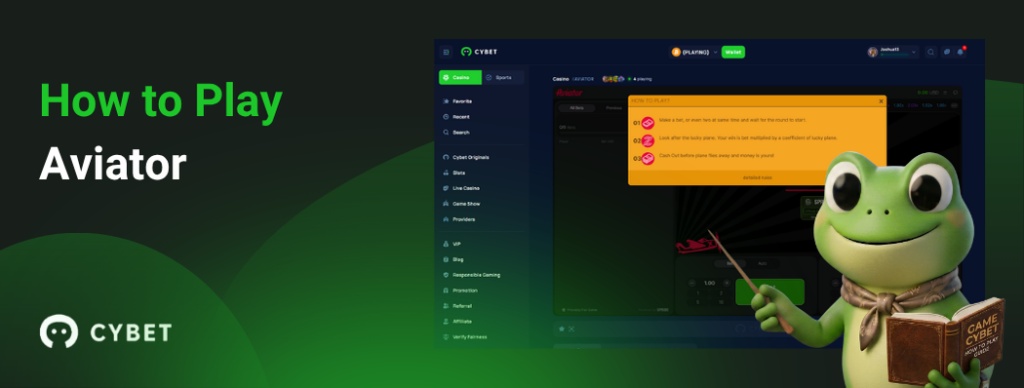
On the Cybet platform, Aviator follows a short cycle: the player chooses the stake, launches the round, watches the multiplier rise, and decides when to exit. This section explains how the format works in practical terms and how manual and automatic payout settings are used without extra steps.
How to Place a Bet
Players place a bet before the round starts. Once the timer ends, the round begins automatically, and the coefficient starts moving upward. The bet is active only for that round, so every new round requires a new decision on amount and timing.
Basic sequence:
- Open Aviator and check the stake field
- Enter the amount for the next round
- Confirm the bet before the countdown finishes
- Watch the multiplier in real time
- Use aviator cash out before the round ends
The result depends on the multiplier shown at the exact moment the player leaves the round. If the flight stops first, that stake is lost.
How to Use Auto Cash Out
Auto cash out is a preset function that closes the round at a selected multiplier. The player sets the target value before the round starts, and the system processes the exit automatically if that value is reached. This tool helps keep decisions consistent and reduces delayed reactions during fast rounds.
Practical use:
- Set the bet size
- Enter the target multiplier for aviator auto cash out
- Start the round
- Let the system complete aviator cash out at the chosen level
This setting is used when a fixed exit point is preferred over manual timing.

Aviator Demo Mode
Demo mode is the practice version of Aviator where players test round flow, payout logic, and timing without using a real balance. This format shows how the multiplier behaves in live rounds and how cash-out decisions affect the result before moving to standard play.
What aviator demo helps us check:
- how fast the multiplier can rise
- how early or late exits change the result
- how manual and automatic cash-out settings work
- how different stake plans would look in repeated rounds
The free demo is useful for players who want to train rather than play for immediate results. It helps with learning the interface, testing auto cash-out values, and seeing how often risky exits fail compared with lower target levels. This mode also helps new users avoid basic input mistakes, such as entering the wrong stake or missing the cash-out moment. On the platform, Aviator demo mode is used to test timing and settings before real-money rounds.
Strategies for Aviator
These strategies are methods for managing exit points, stake size, and session control during short crash rounds. Each approach works as a way to reduce random decisions and keep play structured from one round to the next.
Early Cash Out Strategy
Early cash out is a low-variance approach where a modest target is set and the round is closed quickly. This beginner strategy is used to collect smaller returns more often rather than wait for high multipliers that may never arrive.
Basic steps:
- choose a fixed stake
- set a low target multiplier
- repeat the same exit point across several rounds
- stop changing the target after single losses or wins
Two Bet Strategy
Two bet play divides risk between two positions in the same round. One bet is placed with an early exit and the second bet stays open for a higher multiplier. This strategy balances earlier control with a second higher-risk position.
Typical structure:
- first bet aimed at a lower multiplier
- second bet left for a longer run
- both stakes kept small relative to the session budget
Session Limit Strategy
Session limit control is a bankroll method built around fixed stop points. The total session budget, the loss cap, and the target result are defined before the first round starts.
Core rules:
- set a maximum session amount
- define a stop-loss limit
- define a profit target
- end the session when either point is reached
This method keeps aviator strategy tied to discipline rather than reaction.

Common Beginner Mistakes in Aviator
Most mistakes come from weak timing control and poor money management. The same pattern appears often in Aviator: the round itself is simple, but errors begin when the plan changes after a few wins or losses.
Waiting for a Multiplier That Is Too High
High-target play is the mistake of holding the bet too long in search of a larger return. In Aviator, the multiplier can stop at any point, so late exits increase the chance of losing a round that was already in profit.
Typical signs:
- ignoring small but repeatable cash-out levels
- changing the exit point after seeing a few high rounds
- treating rare high multipliers as the standard result
Trying to Recover Losses
Loss chasing is the mistake of raising the next stake without a fixed plan. One losing round should not be treated as a signal to force recovery in the next one. This usually breaks bankroll discipline and turns a short setback into a larger session loss.
Common errors:
- doubling the stake after a crash
- removing auto cash-out to chase a bigger result
- entering extra rounds outside the original plan
Playing Without a Session Limit
No-limit play is the mistake of starting without fixed stop points. Session rules should be set before the first round so that bankroll decisions stay stable.
Basic controls:
- set a maximum session budget
- define a stop-loss amount
- define a target profit
- stop when one of those limits is reached
It is also recommended to familiarize yourself with such titles as Plinko, Crazy Time and Monopoly
FAQ
What Is Aviator and How Do You Play It?
Aviator is a crash-format game where we place a bet before the round starts and watch the multiplier rise in real time. We play by entering the stake, starting the round, and using cash out before the flight ends.
How Does the Multiplier Work in Aviator?
The multiplier starts low and increases during the round, raising the possible payout. If the round stops before we cash out, that bet loses.
When Is the Best Time to Cash Out?
The best time to cash out depends on the chosen risk level and session plan. We treat lower target exits as a more controlled option than waiting for rare high values.
Can You Use Auto Cash Out?
Yes, we can use auto cash out by setting a target multiplier before the round begins. The system closes the bet automatically if that level is reached.
Can You Play with Two Bets at the Same Time?
Yes, two bets can be used in the same round when that option is available in the game interface. We use one bet for an earlier exit and the second for a higher target.
Does Aviator Have a Demo Mode?
Yes, Aviator has a demo mode for practice without using a real balance. We use it to test timing, stake settings, and cash-out decisions.
Which Strategy Is Best for Beginners?
A simple plan with small stakes and early exits is a common starting point for beginners. We consider this a more stable option than chasing large multipliers from the first session.
What Mistakes Do Beginners Make Most Often?
The most common mistakes are waiting too long to exit, trying to recover losses with larger bets, and playing without a fixed session limit. These errors usually damage bankroll control faster than the game mechanics themselves.
Guides to Cybet Casino Sections: